A Calendar That Knows the Person Behind the Appointment
Conol
- use-case
- coaching
- connectors
Most personal training does not happen in the hour a client spends with me.
It happens in the small details around that hour: who slept badly, who hates Bulgarian split squats, who is traveling next week, who always forgets to eat before a morning session, and who needs a gentler plan after three days of client meetings.
I train about 16 clients across a small private gym and a few remote sessions. Before Conol, the hard part was not writing workouts. It was keeping the context straight.
My calendar had the sessions. My notes app had injury history and preferences. Text messages had schedule changes. Progress photos and weigh-ins lived in different threads. If someone casually mentioned, "My left knee felt weird after lunges last week," I had to remember to update their plan later.
Sometimes I did. Sometimes I remembered five minutes before the session started.
A calendar that knows the person behind the appointment
I started using Conol because I wanted one place to connect scheduling with client context.
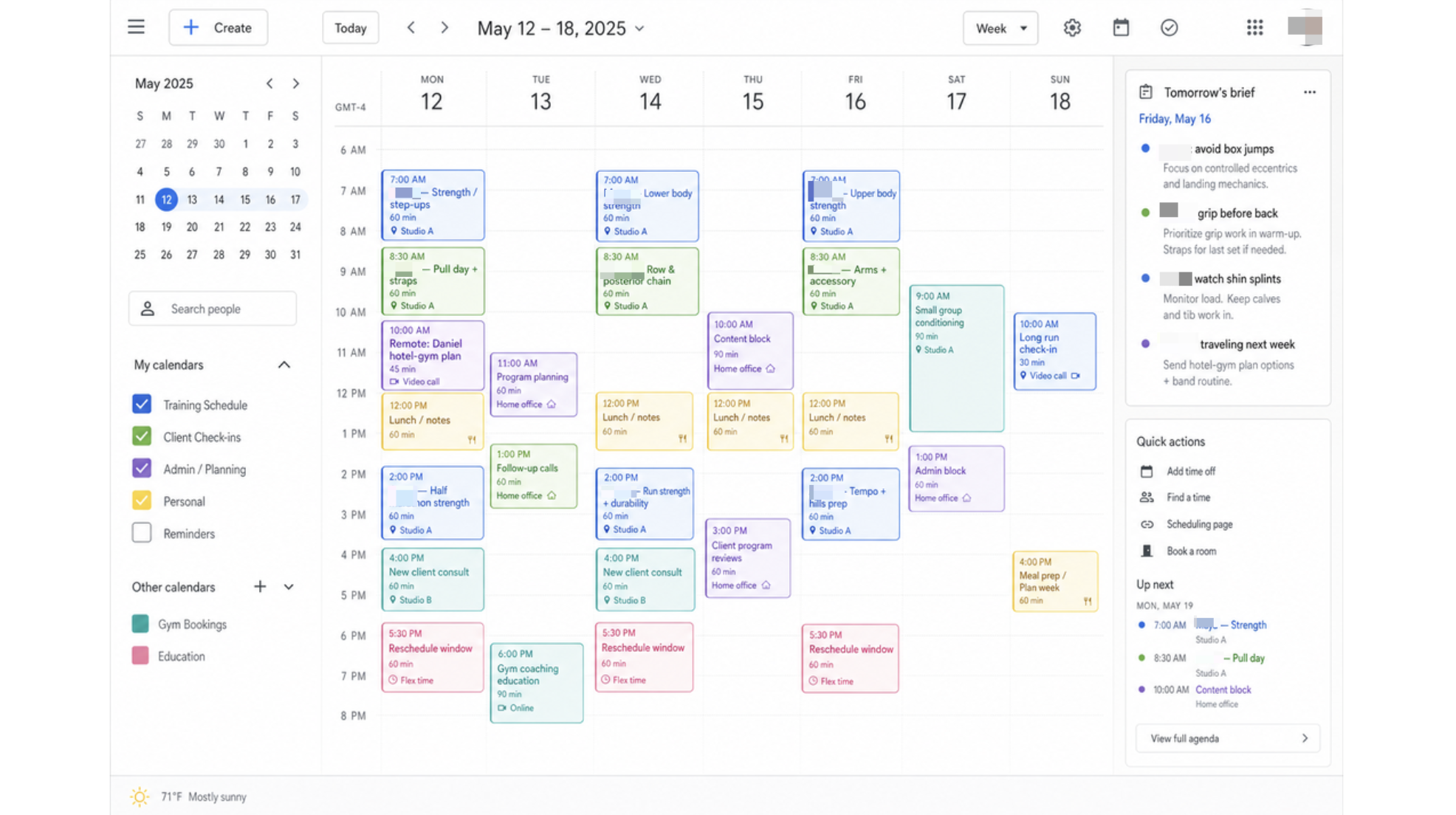
Now, each evening, I use Conol to review tomorrow's training calendar and prepare a short note for the day. The connector feature is what makes this practical: Conol can look across the tools I already use — including my calendar, client messages, notes, and training records — instead of making me copy everything into one place by hand.
Conol adjusts the calendar automatically
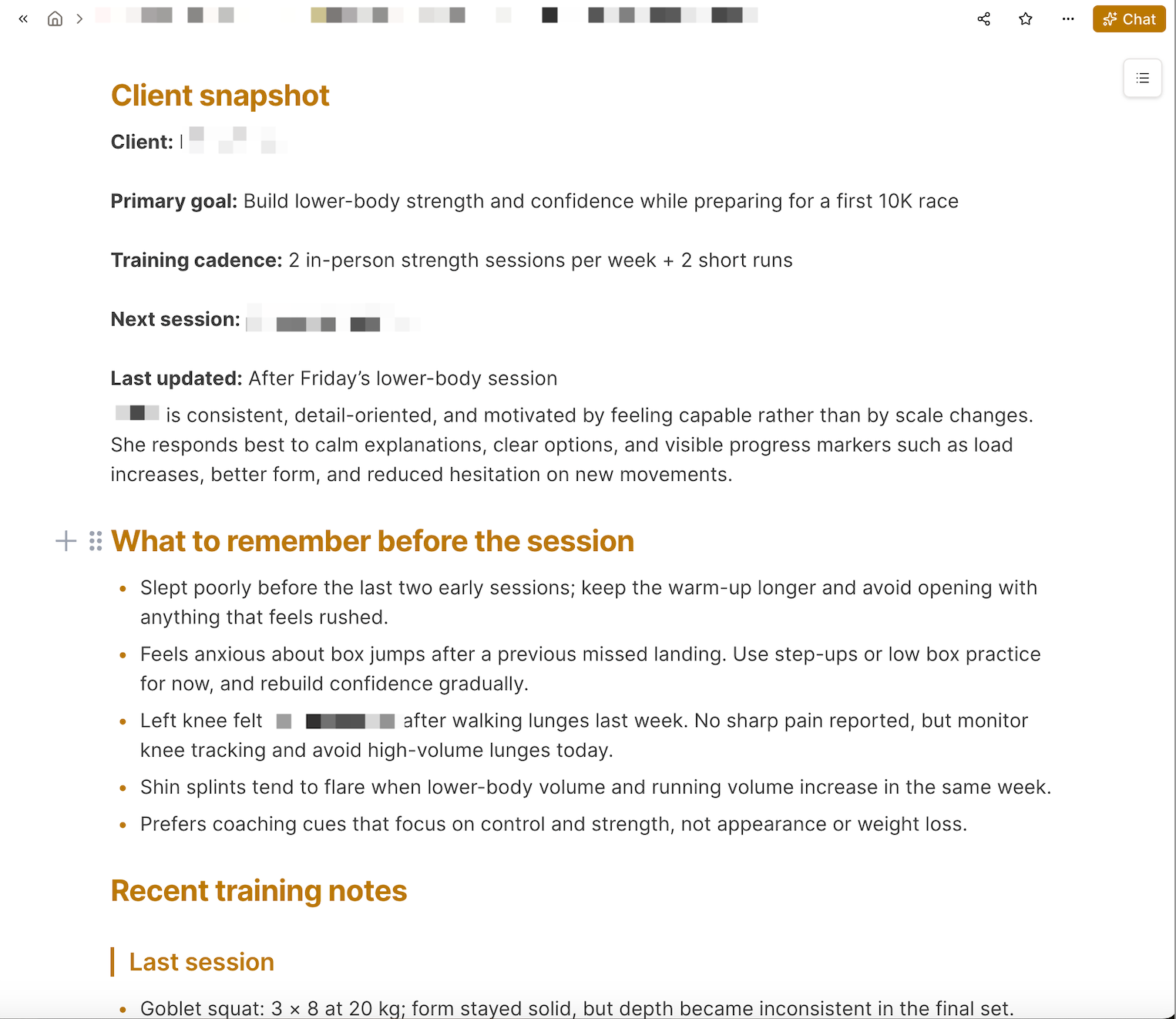
The memory feature is what makes the system feel personal. When I tell Conol, "Maya feels anxious about box jumps," or "Jason's grip fails before his back on rows," it can remember that detail for future planning. I do not have to re-explain every preference, limitation, or coaching cue each week. Conol keeps those small pieces of context available, so the next plan starts from what we already learned.
For example, one client is training for her first half marathon but gets shin splints when we increase lower-body volume too quickly. Conol remembers that pattern and reminds me to keep plyometrics conservative and watch total lower-body volume. Another wants strength training but dislikes being weighed, so it keeps the focus on consistency, load progression, and how she feels in sessions. A third client travels every other week, so Conol can notice the travel dates from the calendar and help me prepare hotel-gym substitutions before he leaves.
Those details used to rely on my memory. Now they show up before the session, connected to the actual appointment where I need them.
Adjusting the plan without starting over
The useful part is not that Conol writes a perfect workout. It does not replace my coaching judgment.
It gives me a better starting point.
If a client texts, "I slept four hours and my shoulder is tight," Conol can flag tomorrow's overhead work and suggest a lower-intensity version: landmine presses instead of strict presses, more warm-up time, and fewer high-fatigue sets.
If someone misses two sessions in a row, Conol reminds me not to jump straight back into the original progression. If a client has been consistent for three weeks, it suggests where I might safely increase load or volume.
I still decide what happens on the floor. But I am no longer rebuilding the context from scattered messages and memory.
Fewer scheduling mistakes, better follow-through
Calendar management has also become calmer. When a client asks to reschedule, Conol can check my availability, notice if moving them would create back-to-back high-energy sessions, and draft a reply with two realistic options.
After sessions, I can dictate quick notes from my phone:
"Remember: Jason's grip failed before his back on rows. Add straps next time and keep working on grip separately."
or:
"Maya felt anxious about box jumps. Use step-ups for now and rebuild confidence gradually."
Those notes become part of the next plan instead of disappearing into a message thread.
Client training summary made by Conol
Before Conol, I spent 45 minutes most nights checking my calendar, reviewing client notes, and adjusting workouts. Now I spend about 10 to 15 minutes reviewing the next-day brief and making final coaching decisions.
The bigger change is that clients feel more remembered. I ask better follow-up questions. I catch limitations earlier. I walk into sessions with a clearer plan, even on busy days.
For a personal trainer, that is the difference between delivering a workout and coaching a person.
Tip
Connect your calendar and client-communication tools, then teach Conol the small preferences and cautions as they come up — "anxious about box jumps," "grip fails before back exercises." The next plan starts from what you already learned, not from a blank page.
← Back to blog